
kuz.

episode · biology

Are you a single person, or a colony?

Trillions of microbes live in your gut and wire straight to your brain. Your moods and cravings are partly theirs.

Thumbnail for Are you a single person, or a colony?

The short answer

By cell count, almost half of you is not human. Roughly thirty eight trillion bacteria live on and in you, most of them packed into your gut, and less than one percent of the genes you carry are human. That colony is not just along for the ride. Your gut is laced with around five hundred million neurons, its own nervous system, wired to your brain through the vagus nerve. Gut microbes produce and modulate the same chemical messengers your brain runs on, including the bulk of your body's serotonin. Through that line they help shape your mood, your stress, and your cravings. So when you reach for a snack, the urge is not entirely yours. You were never one person. You are a colony.

Transcript

Right now, you want something. A snack. Sugar. That craving might not be yours.

You are not one thing. By cell count, almost half of you isn't human. It's trillions of bacteria.

And less than one percent of the genes inside you are human at all.

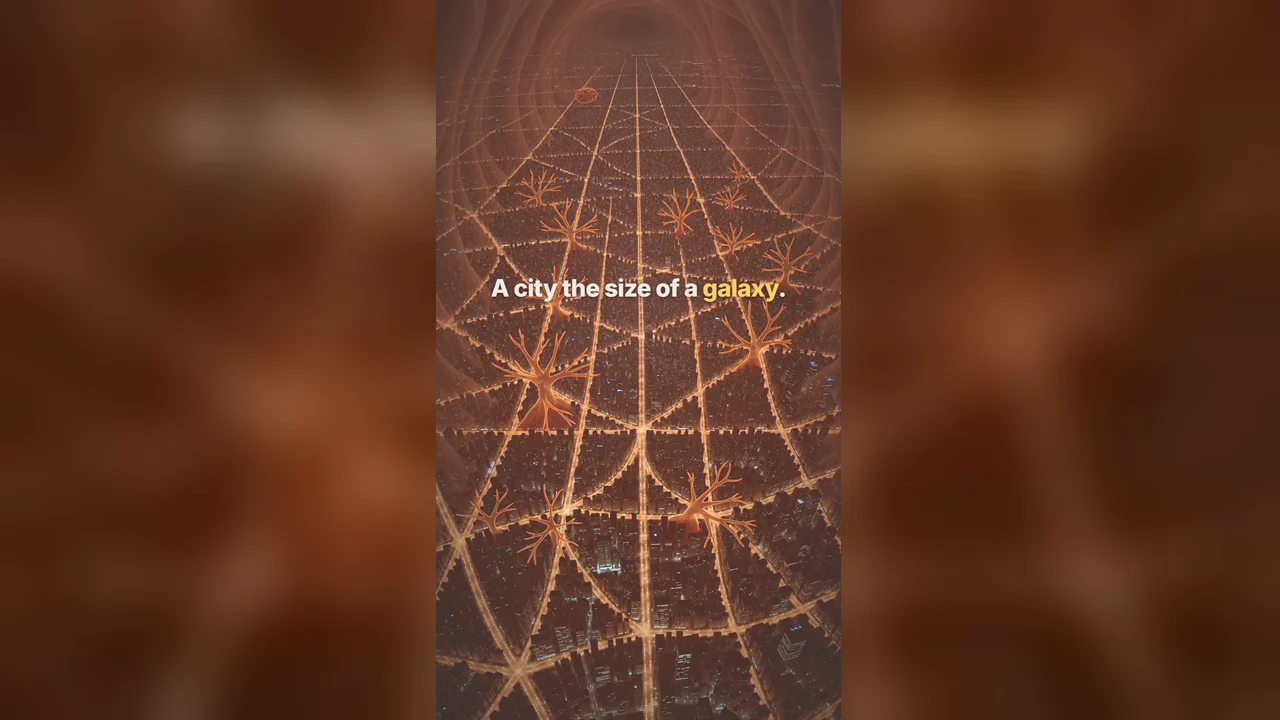
Picture a city the size of a galaxy, teeming with trillions of living things, and it's inside you, right now.

They're not just passengers. Your gut wires straight to your brain, and they sway your mood, your hunger, your choices.

So when you reach for that snack, is it you? Or them, feeding themselves through you?

You were never one person. You're a colony.

So who's really in charge? Follow kuz.

Sources

  1. Sender, R., Fuchs, S., Milo, R. (2016). "Revised Estimates for the Number of Human and Bacteria Cells in the Body." PLOS Biology, 14(8), e1002533. DOI: 10.1371/journal.pbio.1002533. Recalculated the old 10:1 bacteria-to-cell ratio down to a tighter 1.3:1 estimate: roughly 38 trillion bacterial cells, most of them in the colon, versus about 30 trillion human cells for a 70 kg reference adult. By cell count you are slightly more bacterial than human. Open source
  2. Gilbert, J. A., Blaser, M. J., Caporaso, J. G., Jansson, J. K., Lynch, S. V., Knight, R. (2018). "Current understanding of the human microbiome." Nature Medicine, 24(4), 392-400. Review establishing that the gut microbiome contributes millions of microbial genes, vastly outnumbering the roughly 20,000 protein-coding genes in the human genome, and that this collective gene pool shapes metabolism, immunity and host physiology. Open source
  3. Cryan, J. F., Dinan, T. G. (2012). "Mind-altering microorganisms: the impact of the gut microbiota on brain and behaviour." Nature Reviews Neuroscience, 13(10), 701-712. Landmark review of the microbiota-gut-brain axis: gut bacteria communicate with the brain via the vagus nerve, immune signalling and microbial metabolites, influencing stress responses, anxiety, mood and behaviour. Open source
  4. Yano, J. M., Yu, K., Donaldson, G. P., Shastri, G. G., Ann, P., Ma, L., Nagler, C. R., Ismagilov, R. F., Mazmanian, S. K., Hsiao, E. Y. (2015). "Indigenous bacteria from the gut microbiota regulate host serotonin biosynthesis." Cell, 161(2), 264-276. Showed that gut microbes drive production of serotonin by enterochromaffin cells, consistent with the long-standing figure that roughly 90 to 95 percent of the body's serotonin is made in the gut rather than the brain. Open source
  5. Furness, J. B. (2012). "The enteric nervous system and neurogastroenterology." Nature Reviews Gastroenterology & Hepatology, 9(5), 286-294. Describes the enteric nervous system, the gut's own network of roughly 500 million neurons that can operate independently of the brain and spinal cord. This "second brain" is the structural basis for the gut-brain axis and the enteric reflexes that govern digestion. Open source

related

other things you've googled.

follow kuz for the next answer.

Follow kuz on YouTube