
kuz.

episode · memory

Is your favorite memory even real?

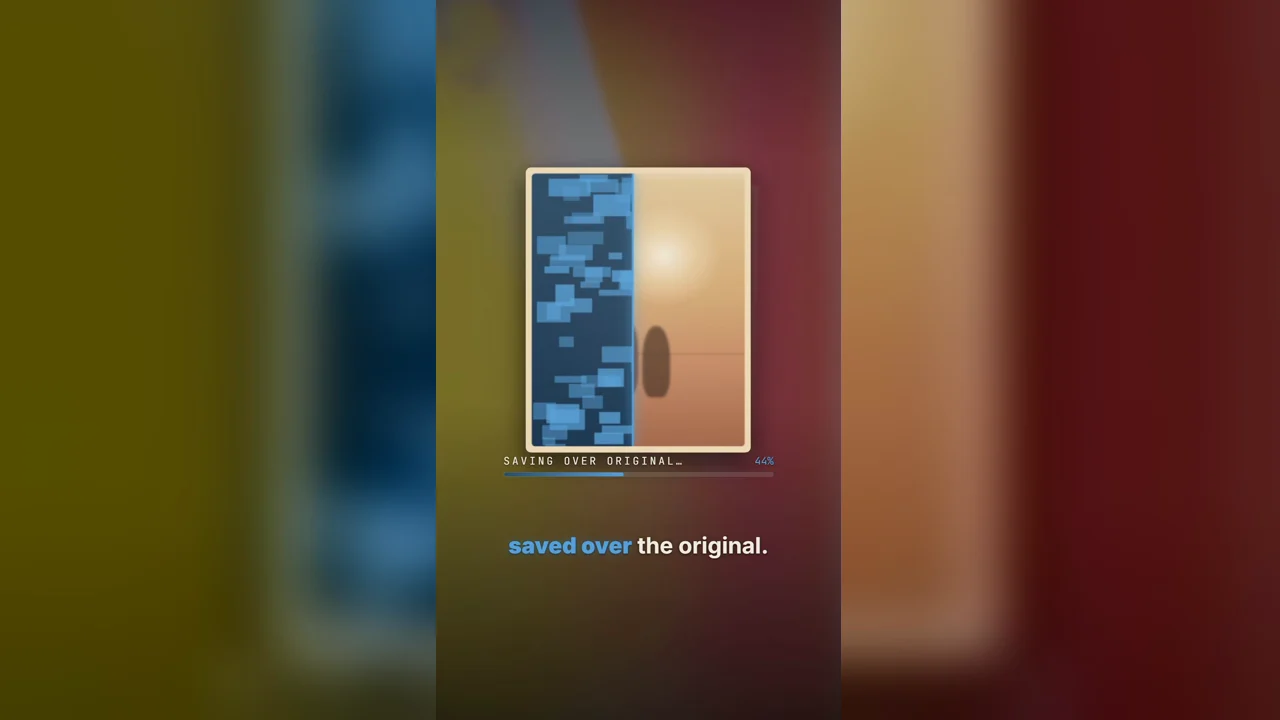
Every recall rebuilds the memory and saves the edit over the original. The moments you replay most are the ones you have rewritten most.

Thumbnail for Is your favorite memory even real?

The cited answer

Your favorite memory is not a recording. It is a reconstruction. Retrieving a consolidated long-term memory makes it temporarily labile, and it has to be re-stored. During that window the present can leak in, and your brain saves the edited version over the original. This is called reconsolidation, demonstrated by Nader, Schafe and LeDoux in 2000. So the memories you replay the most accrue the most drift: you do not remember the day, you remember the last time you remembered it. Flashbulb memories feel vivid and you stay highly confident in them, yet they decay and distort like any other. High confidence is not proof of accuracy. The honest version: the gist is usually stable, but the specific details drift.

Transcript

Think of your happiest memory. Really picture it: the faces, the light, the way it felt.

Here's the hard part. That memory isn't a recording. It's a forgery.

Your brain doesn't store the past like video. Every time you remember, it rebuilds the whole scene from scratch.

And the instant you pull it up, it turns soft, editable. Whatever you feel right now leaks in, and your brain saves over the original.

So the moments you replay the most, the ones you love the most, are the ones you've rewritten the most.

Copied, and re-copied, until the sharp edges blur.

You don't remember that day. You remember the last time you remembered it.

And the details you're most certain about are often the most invented.

It still feels real. You just can't ever go back and check.

Sources

  1. Nader, K., Schafe, G. E., LeDoux, J. E. (2000). "Fear memories require protein synthesis in the amygdala for reconsolidation after retrieval." Nature, 406(6797), 722-726. Showed that recalling a consolidated long-term memory returns it to a labile state that requires protein synthesis to be re-stored. Blocking that re-storage erases the reactivated memory: the founding evidence that retrieval makes memory editable, not fixed. Open source
  2. Bartlett, F. C. (1932). Remembering: A Study in Experimental and Social Psychology. Cambridge University Press. Established that human memory is reconstructive, not reproductive. Recalling a story ("The War of the Ghosts"), subjects systematically distorted details to fit their own expectations and prior knowledge, rebuilding the memory from fragments plus present context rather than replaying a stored copy. Open source
  3. Loftus, E. F., Palmer, J. C. (1974). "Reconstruction of automobile destruction: An example of the interaction between language and memory." Journal of Verbal Learning and Verbal Behavior, 13(5), 585-589. Demonstrated the misinformation effect: changing one word in a question ("smashed" versus "hit") altered witnesses' speed estimates and made them misremember broken glass that was never present, proving post-event information rewrites the stored memory. Open source
  4. Talarico, J. M., Rubin, D. C. (2003). "Confidence, not consistency, characterizes flashbulb memories." Psychological Science, 14(5), 455-461. Tracked memories of the September 11 attacks and found that vividness and confidence stayed high over time while the actual consistency of the recollection decayed at the same rate as ordinary memories. High confidence is not evidence of accuracy. Open source
  5. Hirst, W., Phelps, E. A., et al. (2015). "A ten-year follow-up of a study of memory for the attack of September 11, 2001: Flashbulb memories and memories for flashbulb events." Journal of Experimental Psychology: General, 144(3), 604-623. A large longitudinal study confirming that emotionally charged "flashbulb" memories distort substantially within a year, then stabilise in their inaccurate form, even as people remain certain they remember the event correctly. Open source

related

other things you've googled.

follow kuz for the next answer.

Follow kuz on YouTube